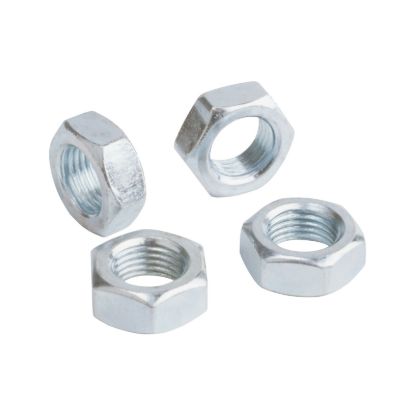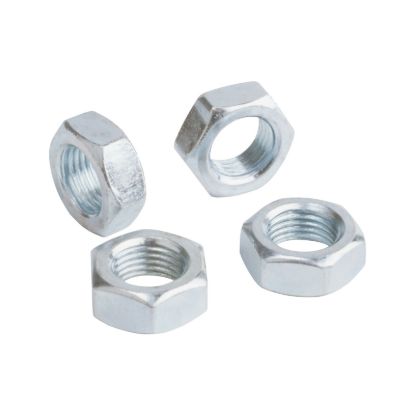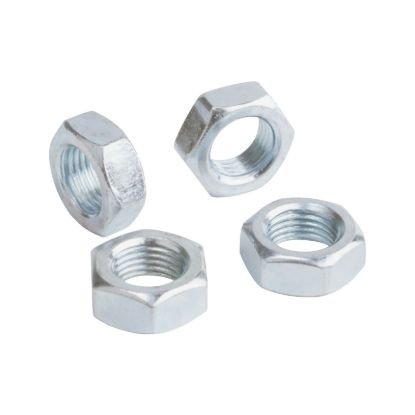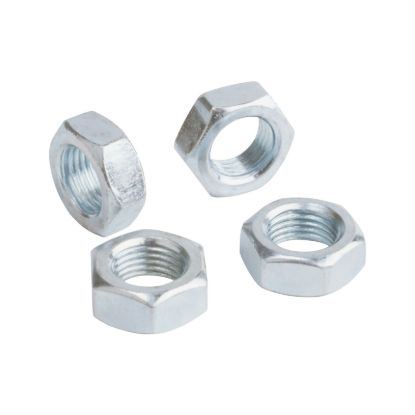
QA1 Aluminum Jam Nut
qapJNL8A
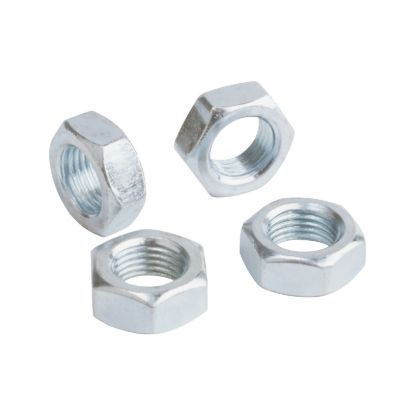
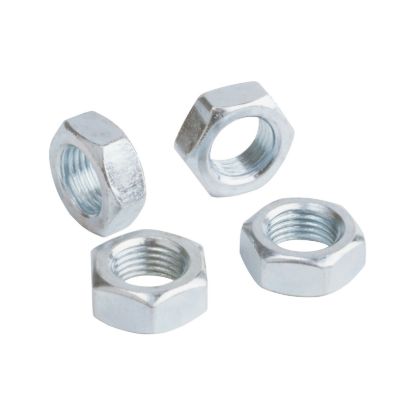
QA1 Jam Nut - 1/2-20 Left Hand - 3/4in Hex 5/16in Wide - Aluminum
7,08 € excl. VAT
Does an adjustment come loose because the thread isn't locked? Jam nuts are tightened against another nut or part and hold the thread in place. We stock jam nuts from QA1 in steel and aluminium, with imperial or metric threads and in both right-hand and left-hand threads.
Among our nuts for your project, the jam nut is the low-profile type that is tightened against a part on the same thread so the two lock each other. It is typically used to hold a setting, e.g. on rod ends and adjustable rods, where the thread could otherwise work itself loose due to vibration.
If you measure the thread on an existing part, compare it with the stated dimensions for jam nuts from QA1.
First set the part, hold it in place, and then tighten the jam nut against it. Follow the manufacturer's instructions for tightening, as aluminium can be damaged by overtightening. Inspect the nuts regularly on parts that are adjusted often, and replace them if the thread or hex is damaged. You'll find other types among our other nuts.
When the part the nut will be fitted to has a left-hand thread – typically one end of an adjustable rod where the other end has a right-hand thread. Check the thread direction before you order.
Steel can typically be tightened harder and withstands more wear, while aluminium saves weight. The choice depends on the load, tightening torque and the material of the part the nut is tightened against.
Often yes, if the thread and hex are undamaged and the nut locks properly when tightened. If the thread is worn or the nut comes loose, you should replace it – especially on steering or suspension parts.